Wind Uplift & Displacement
We look for lifted edges, broken seals, creased shingles and roofing that shifted or detached during high wind.

After high wind, driving rain, hail or fallen debris, the first job is to determine what the storm actually changed. Rhyne Roofing evaluates visible damage, identifies active exposure and builds a repair or replacement scope around the roof's condition—not assumptions.
Wind can lift roof edges and break seals without carrying the material away. Wind-driven rain can enter beneath displaced roofing, and branches or airborne debris can damage flashings, ridges and penetrations. Some problems leak immediately; others remain hidden until the next heavy rain.
Rhyne Roofing reviews visible roof conditions and relevant interior symptoms to determine what needs temporary protection, repair, monitoring or a broader replacement conversation.
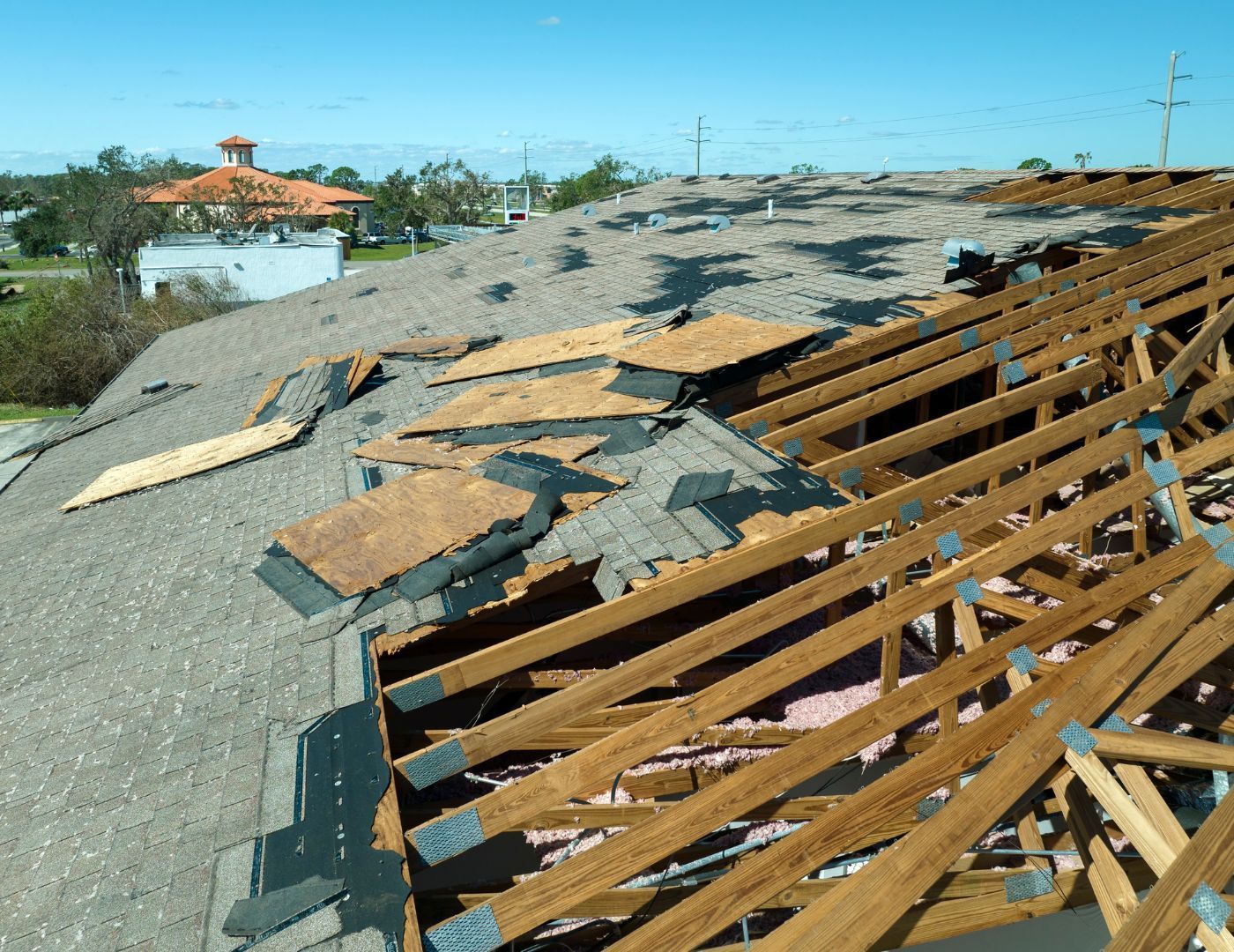
A useful storm inspection looks beyond the most obvious missing material. The surrounding roof, water-shedding details and visible interior symptoms must be considered together.
We look for lifted edges, broken seals, creased shingles and roofing that shifted or detached during high wind.
Branches, hail and windborne debris are considered where they may have cracked, punctured or distorted roofing components.
Roof transitions and perimeter details are reviewed because storms often expose weaknesses at connections and terminations.
Ceiling stains, attic moisture and active dripping help trace where wind-driven rain may be entering the system.
Accessible evidence of soft, sagging or moisture-affected decking is documented for the proposed scope.
The findings are organized into temporary protection, localized repair or replacement guidance based on the affected area and remaining roof condition.
A storm can leave loose roofing, wet surfaces, damaged ceilings and unstable debris. The safest first steps happen from the ground or inside the property—not on the roof.
Stay away from fallen branches, sagging ceilings, standing water near electrical fixtures and areas where roofing material may still be loose.
Move belongings from the affected area and use containers or protective coverings indoors when it can be done without entering an unsafe space.
Photograph interior stains, fallen debris and visible roof changes from the ground. Clear photos help establish what changed without requiring you to climb.
A professional inspection can identify active exposure, document visible conditions and define whether the practical next step is temporary protection, repair or replacement.
Tell us what happened, what you can safely see and whether water is entering the property.
We evaluate accessible roof areas, storm-related damage patterns and relevant interior symptoms.
You receive a practical recommendation for temporary protection, repair or replacement based on the findings.
The defined roofing work is completed with communication, oversight, property protection and cleanup.
If storm damage appears widespread and you want preliminary roof replacement pricing, use Rhyne Roofing's online estimate tool. Active leaks, localized damage and uncertain conditions should begin with a direct storm inspection.
Important: The online result is preliminary replacement guidance. It cannot identify storm damage, determine repairability or confirm insurance coverage. Final roofing scope and pricing require verified property conditions.
Storm damage may include lifted, creased or missing shingles; broken or displaced tile; bent metal components; punctures from debris; damaged ridge, edge or flashing details; and water entry connected to wind-driven rain. The extent must be confirmed through an inspection.
Yes, when the property experienced strong wind, hail, falling branches or visible material movement. Some storm damage affects seals, fasteners or transitions without causing an immediate interior leak.
Yes. Wind can lift roofing, break adhesive seals, crease shingles, loosen fasteners or disturb edge and flashing details while leaving the material generally in place.
Localized damage on an otherwise serviceable roof may be repairable. Replacement becomes more practical when damage is widespread, the roof is near the end of its service life or compatible repairs cannot restore a dependable system.
Keep people away from sagging ceilings, wet electrical fixtures and other unsafe areas. Move belongings when it is safe, contain interior water if practical and request a roof inspection. Do not climb onto a wet or damaged roof.
No. Rhyne Roofing can inspect visible roof conditions and define the roofing work that appears necessary. Coverage, deductibles and claim decisions remain between the property owner and the insurance carrier.
Schedule the inspection as soon as safely practical, especially when roofing materials are missing, water is entering, debris struck the roof or another rain event could worsen the exposure.
No. The online estimator is intended for preliminary roof replacement pricing. Storm repair pricing requires an inspection because the affected area, material compatibility and concealed conditions must be evaluated.
Storm paths and roof conditions vary by property. Explore your market or contact Rhyne Roofing to confirm service availability for your address.
Whether you see missing roofing, interior water, fallen debris or no obvious damage at all, Rhyne Roofing can evaluate visible conditions and explain the practical next step.