Seams & Membrane
Open seams, punctures, splits, blisters or surface deterioration can allow water into the system and may require compatible repair materials.
Stop treating every ceiling stain as a simple patch. Rhyne Roofing investigates commercial roof leaks, membrane damage, failed flashings and vulnerable penetrations to define a repair scope based on the likely entry point and the surrounding roof condition.
Water can travel along decking, insulation, structural members and penetrations before it becomes visible inside. Patching directly above an interior stain without investigating the roof can miss the actual entry point and waste money.
Rhyne Roofing reviews the affected area, nearby details and the broader condition of the commercial roof before defining a targeted repair recommendation.
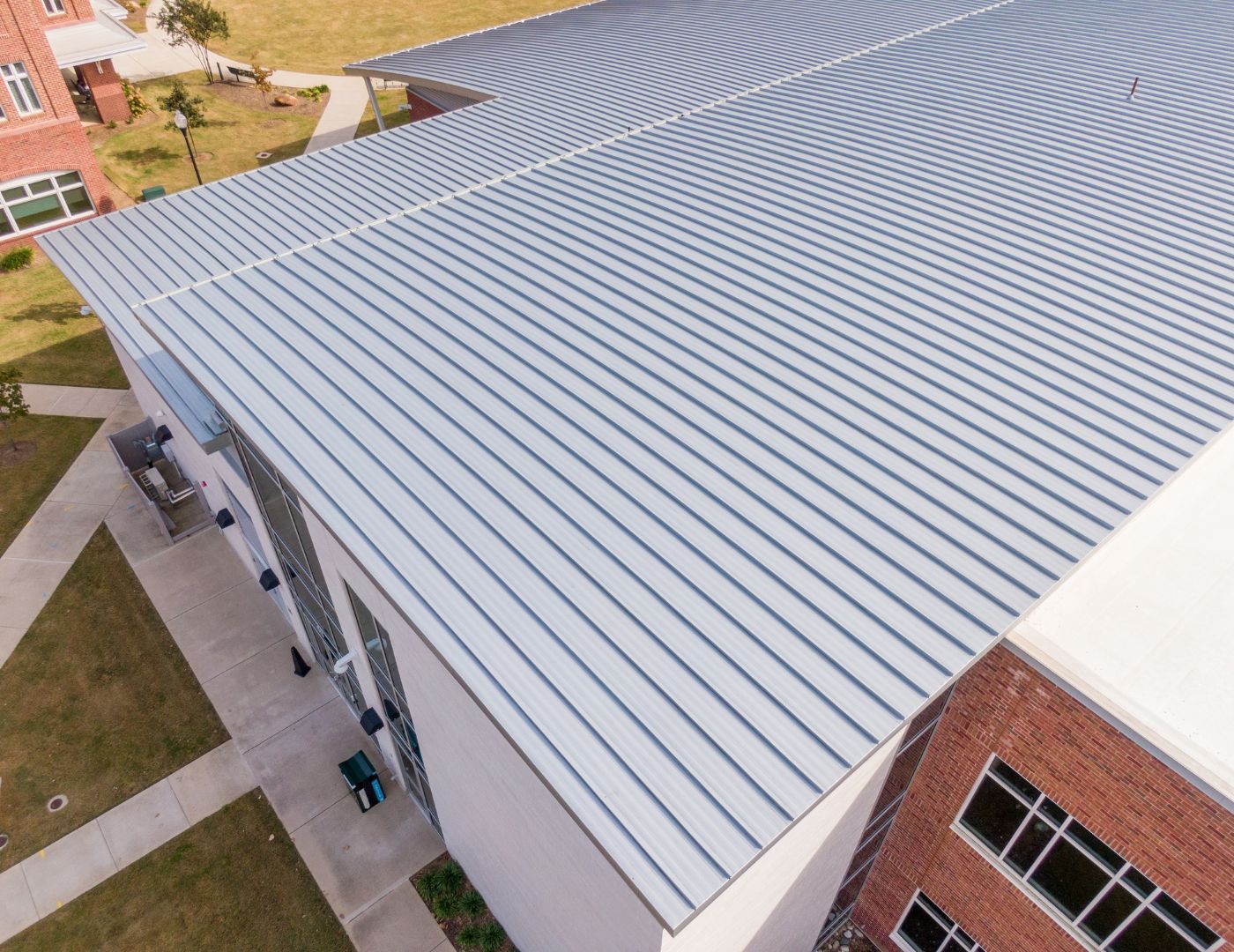
The visible symptom may have more than one possible cause. These roof areas are often part of a useful commercial leak investigation.
Open seams, punctures, splits, blisters or surface deterioration can allow water into the system and may require compatible repair materials.
Base flashings, wall transitions and changes in plane experience movement and are frequent sources of commercial roof leakage.
Pipes, vents, drains, conduits and equipment supports require watertight, system-compatible details that remain serviceable.
Blocked or deteriorated drainage components can create ponding, overflow and water pressure around vulnerable details.
HVAC curbs, service panels and equipment traffic can damage roofing or expose weak transitions around mechanical units.
Loose edge metal, failed sealants and wind-related perimeter damage can compromise the roof and allow water intrusion.
Commercial roof repair is not just a patching exercise. The recommendation should explain whether the defect is isolated, whether the surrounding assembly remains serviceable and whether the proposed detail can be integrated without trapping moisture or shifting the problem.
An isolated puncture, open seam or failed flashing may support a focused repair. Repeated leaks across several roof areas point to a broader condition that spot work may not control.
Compatible repair materials need a sound surface. Saturated insulation, soft decking or widespread membrane deterioration can make a small repair unreliable even when the visible opening is limited.
The repair method must match the existing roof system and connect cleanly at seams, penetrations, walls, curbs and edges—not rely on surface sealant as the entire solution.
Share interior leak locations, timing, photos and any known roof history or recent work.
The visible condition, nearby details, drainage and likely water paths are evaluated.
The proposed repair area, materials, assumptions and limitations are explained before work begins.
The repair is completed and the owner receives practical guidance on follow-up or broader roof priorities.
Commercial roof repair requires direct evaluation. Contact Rhyne Roofing with the property address, active leak information and access details so the team can determine the appropriate next step.
Important: During active rain or severe weather, interior water management may be the immediate priority. Permanent exterior repair must wait until access and conditions are safe and the roof surface can be evaluated properly.
The investigation compares the interior symptom with roof layout, seams, penetrations, flashings, drainage and visible damage. Because water can travel, the entry point may not be directly above the stain.
Safe temporary water-control measures may sometimes be possible, but permanent exterior repairs typically require safe access and suitable surface conditions. Emergency conditions should be discussed directly with the contractor.
No. A localized failure may be repairable. Replacement becomes more likely when the roof has widespread deterioration, extensive moisture, an unstable substrate or repeated failures across multiple areas.
Common causes include incomplete earlier repairs, wet insulation, movement at flashings, neglected drainage, failing seams, incompatible materials, rooftop traffic or multiple entry points.
Yes. Previous repair invoices, roof plans, warranty documents, leak maps and photos can help identify patterns and avoid repeating ineffective work.
Repair methods depend on the exact system, its condition and material compatibility. Rhyne Roofing evaluates the existing roof before recommending the appropriate detail or broader scope.
Not automatically. Warranty requirements vary by manufacturer, contractor and system. Existing warranty documents should be reviewed before work when warranty status matters.
Replacement should be evaluated when failures are widespread, moisture is extensive, the substrate is unstable, the roof is near the end of its service life or repair spending is no longer producing dependable performance.
Contact Rhyne Roofing to confirm availability and response options for your commercial property and current roof condition.
Document the symptom, inspect the likely entry points and build a repair scope that fits the roof's actual condition and remaining service life.