


What Are the Most Common Causes of Shingle Roof Leaks in Ocoee, FL?
Ceiling stains after a storm rarely start where they show, and the real source is usually a small, fixable weak point.
Get a free estimate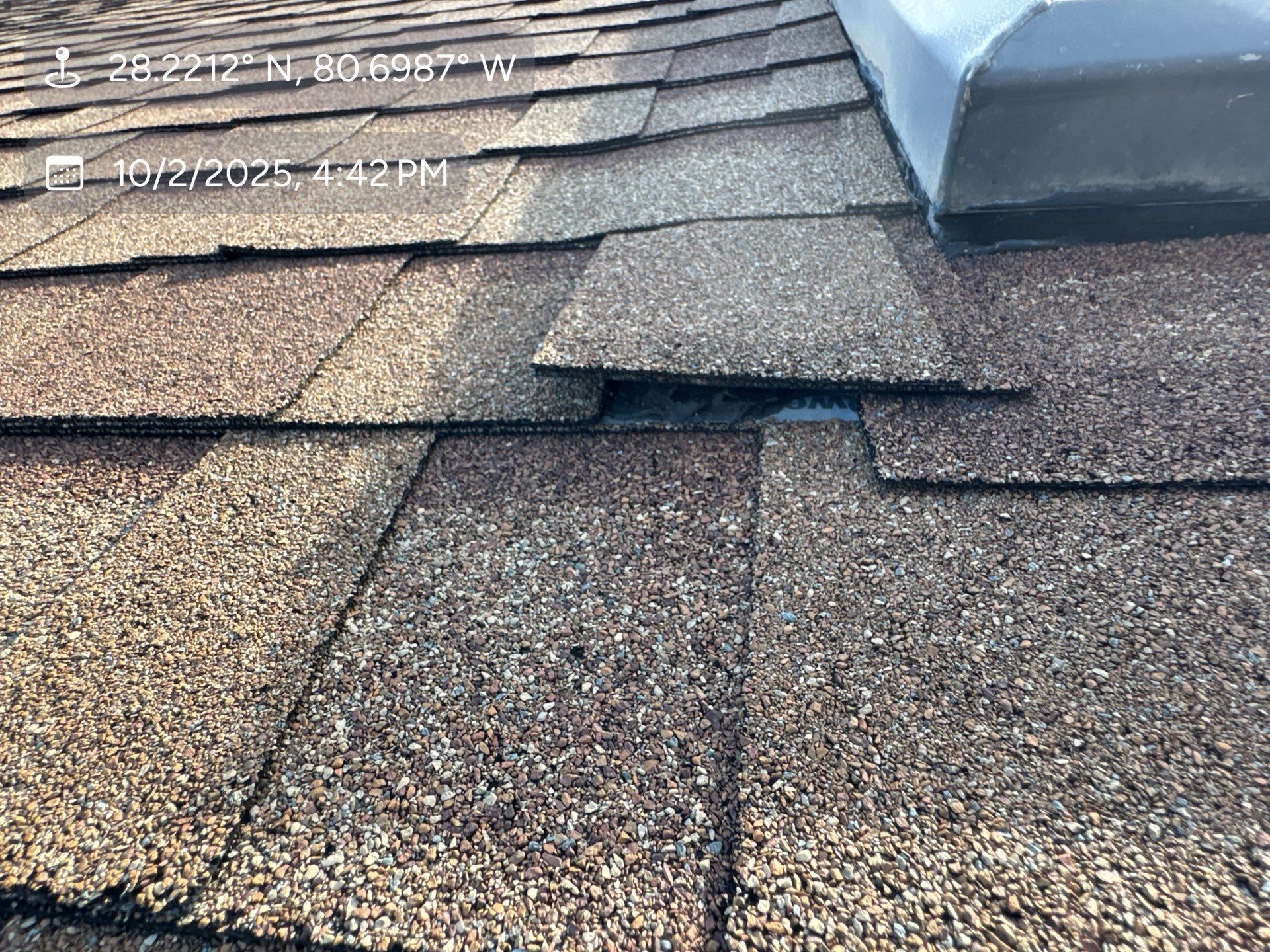
Most shingle roof leaks start where the roof changes direction or gets cut open: worn flashing, cracked pipe boots, lifted or missing shingles, and valleys that carry more water than the rest of the roof. Age and heat make every one of these worse, so a leak that shows up after a summer storm is usually the end of a slow process.
In Ocoee, the pattern tends to follow the weather. Afternoon storms push rain sideways and the sun bakes the roof most of the year, so the first sign is often a brown ring on a bedroom ceiling the day after a hard rain. The spot where water shows inside is rarely where it got in, because water runs along the roof deck and rafters before it drips.
That gap between the entry point and the stain is why guessing gets expensive. Patch the wrong spot and the ceiling stains again at the next storm.
In this guide
Flashing and Pipe Boots: Where Most Leaks Begin
Flashing is the metal that seals the joints where the roof meets something else, such as a wall, a chimney, a skylight, or a vent. When it pulls loose, rusts through, or loses its sealant, water gets behind the shingles with nothing to stop it.
Pipe boots are the rubber collars around plumbing vents. Strong sun dries the rubber until it splits, often years before the shingles around it are worn out. A cracked boot lets water run straight down the pipe into the attic, and it is one of the most common leak sources on houses that are otherwise in decent shape.
These are the spots worth checking first:
- Plumbing vent boots, for cracks or a gap around the pipe
- Step flashing, where a lower roof runs up against a second-story wall
- Kickout flashing, the small angled piece that steers water away from the wall at the bottom of a roof-to-wall joint
- Skylight frames and their seals
- Exhaust and attic vents with dried or missing sealant
Why Do Lifted or Missing Shingles Let Water In?
Shingles shed water because each row overlaps the one below it and the tabs are sealed down. Once that seal breaks, wind can lift a tab and drive rain underneath.
Heat plays a part here. Asphalt shingle roofs rely on a strip of sealant that bonds the tabs in warm weather, but years of heating and cooling can weaken that bond. One gusty storm can then crease or tear the tabs. A creased shingle may still look flat from the ground, yet it no longer seals. Missing shingles are easier to spot: look for dark patches, exposed underlayment, or pieces in the yard after a storm.
Nail problems belong in this group too. Nails driven too high, at an angle, or not deep enough can back out over time and push up through the shingle above, leaving a small hole right in the path of running water.
Valleys, Gutters, and Other Places Water Collects
A valley is the inside corner where two roof slopes meet. It carries water from both slopes at once, so it wears faster and leaks sooner than the open areas of the roof.
Debris makes it worse. Oak leaves and pine needles pile up in valleys and gutters, hold moisture against the shingles, and slow drainage during heavy rain. When gutters overflow, water can back up under the roof edge and rot the fascia board and the wood behind the drip edge, the metal strip that runs along the eave.
Low-slope sections, such as a back porch or an addition tied into the main roof, are another weak spot. Shingles need enough pitch to shed water. On a shallow section, water moves slowly and finds every small gap.
Aging Shingles and Heat Damage
Age is behind many leaks that seem to come from nowhere. As asphalt shingles get older they lose the granules that shield them from the sun, then they dry out, curl, and crack. Watch for:
- Granules collecting in gutters or at the bottom of downspouts
- Curled edges or cupped shingles
- Bald or shiny patches where granules are gone
- Cracks running across the face of a shingle
- A roof that looks blotchy or uneven in color
Attic heat speeds this up. Poor ventilation traps hot air under the roof deck and cooks the shingles from below as well as above. If the attic feels like an oven on a summer afternoon and one side of the roof is aging faster than the other, ventilation is worth checking before anything gets replaced.
How to Tell a Roof Leak From Something Else
Not every ceiling stain is a roof leak. Air conditioning drain lines, ductwork sweating in a hot attic, and plumbing can all leave stains that look the same.
Timing is the best clue. A stain that grows after rain points to the roof. A stain that grows on dry, humid days, especially near the air handler or a supply vent, points to condensation or a clogged AC drain. A stain under a bathroom points to plumbing first.
- Note when the stain appears or grows, and whether it rained that day.
- If you can stand safely on the attic walkway or decking, check with a flashlight after a storm for wet wood or daylight.
- Photograph the stain so you can compare its size later.
- Stay off the roof. Wet shingles and steep pitches cause serious falls.
A professional roof inspection follows the water back to where it enters, which is the only way to know whether the fix is a boot, a flashing detail, or the shingles themselves.
How Rhyne Roofing Approaches a Leak
Finding the real entry point comes first. Rhyne Roofing offers free roof inspections, so a homeowner can learn whether the problem is a cracked boot, a valley, or worn shingles before deciding what to fix. Many leaks end in a targeted roof repair rather than a new roof.
When the answer does involve shingle work, the materials matter. Rhyne Roofing is an Owens Corning Preferred Contractor, a credential worth asking about when a leak turns into replacing a section of shingles.
The company is also state licensed, under Florida license CCC1329471. That is worth confirming with any roofer before work starts on your home, and it takes a minute to check.
What Ocoee Weather Does to Shingle Roofs
Shingle roofs in Ocoee deal with three pressures for much of the year: heavy afternoon rain in summer, strong sun, and the wind that arrives with storms during hurricane season, which runs from June through November.
The rain comes down hard and fast, so small gaps that would stay dry in a light shower take on water. The sun breaks down shingles and rubber boots faster than it would in a cooler climate. And the humidity keeps attics damp, which can hide a small leak until the decking starts to soften.
Many yards in the area have mature oaks close to the roofline. They drop leaves into valleys and gutters and scrape shingles in the wind. Trimming branches back from the roof is one of the cheapest ways to head off the next leak.
Get the Leak Traced Before the Next Storm
A stain that keeps coming back is worth a look before the next round of afternoon storms soaks the decking. For a shingle leak in Ocoee, Rhyne Roofing can trace where the water gets in and explain the fix in plain terms. Call (407) 277-4963 or book a free roof inspection.
Shingle Leak Questions
Can a roof leak if no shingles are missing?
Yes. Many leaks come from flashing, cracked pipe boots, nail holes, or worn sealant, and none of those show from the ground. A roof can look complete from the driveway and still let water in at a vent or along a wall. That is why the source of a leak usually has to be traced from the attic and the roof surface together.
Why does my roof only leak during heavy storms?
Wind-driven rain moves sideways and can push water under lifted tabs, past loose flashing, or through a gap that stays dry in a light shower. Heavy rain also fills valleys and gutters faster than they can drain. A leak that only shows in strong storms usually points to a weak seal or a drainage problem rather than a hole straight through the roof.
Does one bad shingle mean I need a whole new roof?
Usually not. A few damaged or missing shingles can often be replaced on their own if the rest of the roof is in fair shape. The bigger question is age. If the shingles around the damage are brittle, curled, or losing granules, a patch may not seal well, and the same problem can show up a few feet away soon after.
Is a stain near my AC closet always a roof problem?
No. Air handlers, condensate drain lines, and ducts running through a hot attic can all drip and stain a ceiling. If the stain grows on dry days or sits close to the air handler, the AC system is the first suspect. If it grows after rain and sits under a valley, a vent, or a roof-to-wall joint, the roof is more likely.
What should I do the moment water comes through the ceiling?
Move furniture and electronics away and put a bucket under the drip. If the ceiling is bulging, a small hole at the lowest point lets the water drain into the bucket instead of bringing the drywall down. Turn off power to any light fixture near the water. Take photos for your records, and stay off the roof while it is wet.
Why do Florida shingle roofs seem to age faster than expected?
Shingle life estimates assume average conditions, and Ocoee summers are harder than average. Year-round sun breaks down the asphalt, attic heat cooks the shingles from below, and frequent storms test every seal. A roof with good attic ventilation, clean gutters, and branches kept off it will usually come closer to its expected life than one without those things.
Stop chasing the same stain
A leak that gets traced gets fixed once. A leak that gets guessed at tends to come back with the next hard rain. Call (407) 277-4963 or contact us online.
Get a free estimate